

Published by Medwalt · April 20, 2026 · 8 min read

Every repair technician has been there. A scope arrives needing a bending rubber replacement, the OEM part is back-ordered for six weeks, and the hospital’s procedure schedule cannot wait. A compatible supplier has the same part in stock at a third of the price, with two-day shipping.
Do you order it?
The answer depends entirely on what you know about that supplier—and most technicians, if they are honest, do not know nearly enough. The compatible parts market for flexible endoscopes has matured considerably, but it remains uneven. Some compatible suppliers produce parts that meet or exceed OEM specifications. Others ship components that look correct externally and fail at the worst possible moment.
This guide walks through a practical framework for sourcing OEM-compatible endoscope parts—one that protects your quality standards, satisfies your compliance obligations, and keeps your repair turnaround competitive.
Why the Compatible Parts Market Exists — and What’s at Stake
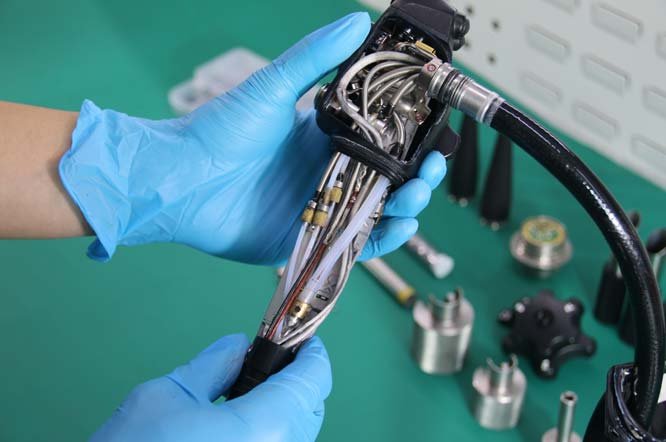
OEM replacement parts for brands like Olympus, Fujifilm, and Pentax carry significant price premiums—a bending section that costs $800 in compatible form may list at $2,000 or more direct from the manufacturer. For high-volume repair centers, switching to verified compatible parts can reduce component costs by 30% to 50%.
Beyond price, lead time is a genuine operational constraint. OEM supply chains are designed around new equipment sales, not aftermarket repair volumes. A compatible supplier with regional stock can often fulfill an order in two to three business days. For repair centers operating under SLA commitments, that gap is not trivial.
The risk, of course, is quality. A poorly manufactured bending rubber installed in a gastroscope does not merely fail—it can cause a scope to fail a leak test mid-procedure, introduce debris into a sterile field, or damage downstream components. The stakes in endoscope repair are higher than in almost any other service trade.
Key Insight: The goal is not to avoid compatible parts. It is to source them with the same rigor you would apply to any other quality-critical decision in your repair workflow.
The Four Pillars of Reliable Compatible Part Sourcing
Before placing any order with a new supplier, evaluate them and the specific part against four criteria. These map directly to the questions your quality system will ask if something goes wrong.
1. Verified Compatibility
Compatibility is not binary. A part can fit physically and still fail functionally. Before ordering, confirm:
- Model-specific cross-reference documentation. The supplier should provide a compatibility matrix mapping their part number to specific OEM brand, series, and model numbers. Vague claims like “fits most Olympus gastroscopes” are not acceptable.
- Critical dimensions in writing. For bending sections: articulation length, distal diameter, knuckle spacing. For insertion tubes: outer diameter, stiffness profile. For valves: elastomer durometer and channel dimensions. If the supplier won’t provide these figures, request a sample before committing to stock.
- Working channel integrity. Inner diameter must be smooth, free of burrs, and free of particulate. Any surface irregularity that catches an accessory during instrument passage is a failure mode, not a cosmetic defect.
2. Quality Management System Evidence

A supplier selling into the medical device repair chain should operate under a documented quality management system. ISO 13485 is the internationally recognized standard for medical device manufacturing and the minimum credible benchmark for components used in endoscope repair.
When evaluating any supplier, ask for:
- Current ISO 13485 certificate with a scope that explicitly covers endoscope components
- Material safety documentation confirming biocompatibility for patient-contact parts (referencing ISO 10993 where applicable)
- Batch testing records — what specific tests are performed before parts ship, and what are the pass/fail criteria?
- Non-conformance data: what is the supplier’s reported return rate for fit-related failures, and what corrective actions have been documented?
Note: A supplier unwilling to share quality documentation is not a supplier worth using. This is not a bureaucratic request — it is the only objective way to distinguish a manufacturer with genuine process controls from one operating without them.
3. Supply Chain Reliability
Quality and availability are separate problems. A supplier may produce excellent parts but carry chronic stock-outs on the exact SKUs your repairs require. Before committing to a supplier relationship, assess:
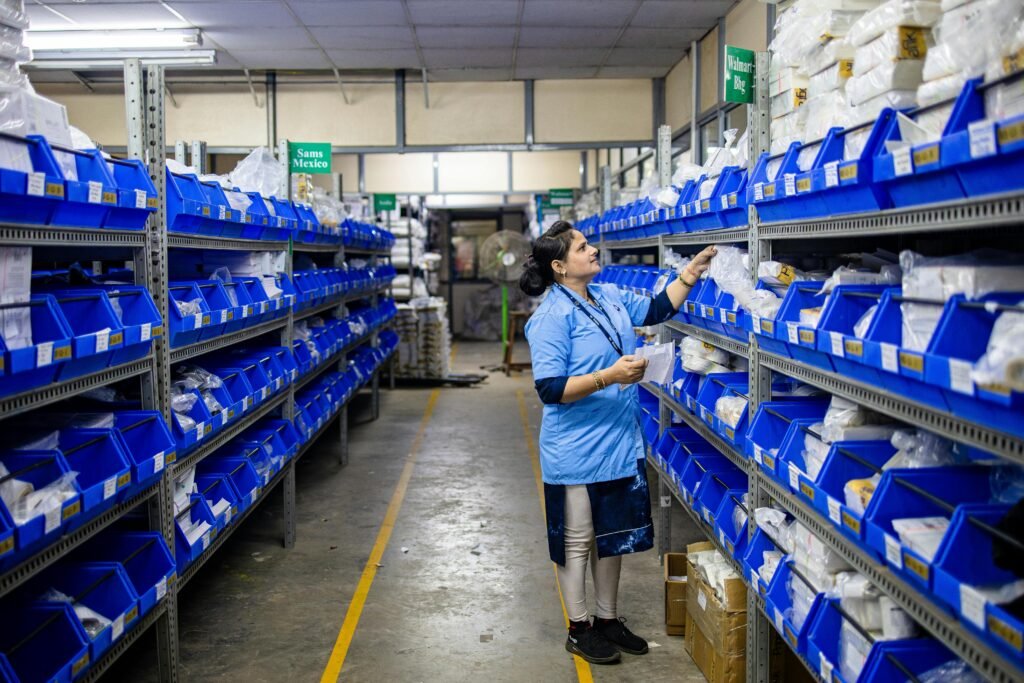
- Inventory depth. What percentage of their catalog is available to ship same-day or next-day for your specific brands and series?
- Lead time transparency. Do they clearly distinguish between in-stock and made-to-order items in real time? Surprises at the order stage reflect poor inventory management.
- Packaging integrity. Flexible endoscope components — especially bending rubbers and insertion tubes — degrade under improper storage conditions. Parts arriving kinked, compressed, or improperly sealed have been compromised before installation.
- Geographic proximity. Cross-border shipments introduce customs delays that are unpredictable and difficult to plan around. For parts you order regularly, a supplier with regional stock is worth a modest premium over one shipping across hemispheres.
4. Total Cost of Ownership
Unit price is only part of the calculation. Before evaluating any supplier on price alone, account for the full cost picture:
| Cost Component | What to Measure | Why It Matters |
|---|---|---|
| Unit price | Including volume/tiered pricing | Starting point only |
| Failure / rejection rate | % of parts failing incoming inspection | Rework labor erases savings fast |
| Downstream failure rate | Post-repair callbacks / warranty claims | Reputational and direct cost |
| Downtime cost | Delayed repairs when parts fail unexpectedly | Often the largest hidden cost |
| Shipping and duties | Total landed cost, including expedite fees | Can eliminate savings on fast orders |
| Warranty coverage | Duration, covered defects, evidence required | Determines risk transfer to supplier |
Tip: A compatible part priced 40% below OEM but rejecting at 15% on incoming inspection is not cheaper — the rework labor alone closes most of the gap. Run this calculation before the supplier relationship is established, not after.
Red Flags: Suppliers Worth Avoiding
Most sourcing mistakes are avoidable. These warning signs appear consistently enough in the compatible parts market to warrant specific attention:
- 🚩 No model-specific compatibility data. Legitimate suppliers document exactly which OEM models their parts have been tested and validated for. Generic claims without specifics indicate compatibility was never properly established.
- 🚩 Inability to produce quality certifications on request. Any supplier manufacturing for the medical device sector should be able to produce current ISO certificates without delay. Deflection or inability is disqualifying.
- 🚩 Prices substantially below market. Compatible parts should cost less than OEM — but there is a floor cost to manufacturing a safe bending rubber or a functional valve assembly. Prices far below that floor reflect a corresponding reduction in materials or process controls.
- 🚩 No RMA or warranty process. Reputable suppliers stand behind their product. A supplier with no clear returns mechanism is signaling that they do not expect to be accountable after the sale.
- 🚩 Inconsistent or untracked packaging. Each batch arriving in different formats, in unlabeled bags, or without lot-number documentation raises legitimate questions about manufacturing consistency and traceability.
Incoming Inspection: A Practical Three-Step Checklist
Even from a trusted supplier, every batch should be inspected on receipt. A structured routine catches manufacturing defects before they enter your repair workflow — and provides documented evidence of due diligence if a repair outcome is ever challenged.
Step 1 — Visual and Dimensional Check
- Inspect surfaces for coating wear, burrs, debris, or contamination
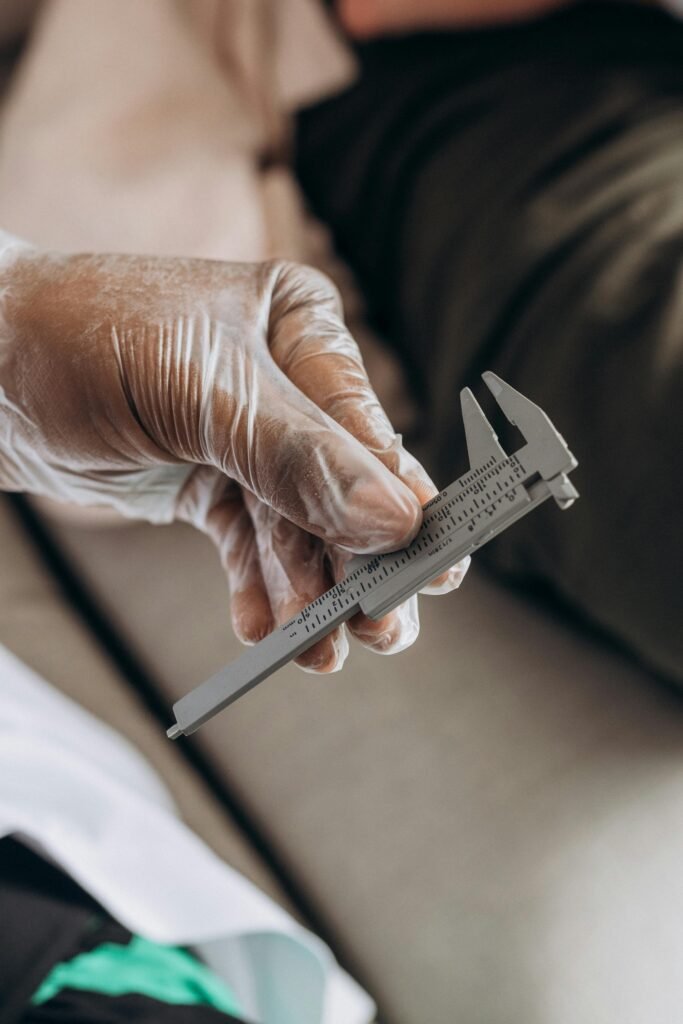
- Verify critical dimensions against specification using calibrated calipers or pin gauges
- For light guide bundles: confirm end-face polish and uniform fiber arrangement
- For working channel components: confirm inner diameter smoothness and absence of particulate
Step 2 — Functional Spot Check
- Bending sections: Articulate through full specified range — movement should be smooth, with no binding, catching, or asymmetric resistance at any point
- Valves: Confirm spring return and check for visible seal deformation before installation
- Insertion tubes: Run leak test to OEM-specified pressure threshold before assembly into scope
Step 3 — Documentation
- Record batch/lot number, supplier part number, and declared model compatibility for every delivery
- Photograph anomalies before quarantine
- Initiate RMA with supplier immediately upon non-conformance identification — do not allow non-conforming parts to reach the repair floor
Tip: For most part categories, a structured inspection of a representative batch sample takes under 10 minutes. The discipline of doing it consistently — not the time it takes — is what distinguishes a professional repair operation from one that discovers problems only when a scope fails in the field.
Compliance: What You Cannot Delegate to the Supplier
The regulatory environment for endoscope repair varies by market, but a few principles hold consistently.
In the United States, FDA expectations require that repaired medical devices meet established safety and performance standards. Repair organizations using compatible parts are responsible for ensuring those parts do not compromise device safety or effectiveness. Maintaining traceability records — which parts were used in which repair, sourced from which supplier, from which lot — is not optional. It is the documentation that demonstrates accountability if a device failure is ever investigated.
Under EU MDR 2017/745, economic operators performing maintenance and repair on medical devices are required to ensure that parts used do not adversely affect device safety. Compatible parts from documented, ISO 13485-certified suppliers satisfy this requirement. Parts from unverified sources with no quality documentation do not.
Important: The burden of demonstrating that a compatible part is fit for use rests with the repair organization — not the supplier. A supplier with proper documentation makes that burden manageable. One without it shifts all the risk to you.
Building a Supplier Relationship That Scales

The most effective sourcing strategy is relational, not transactional. Repair centers that treat their parts suppliers as long-term partners — rather than commodity vendors — tend to get faster responses to problems, better support on compatibility questions, and early access to new product availability.
When evaluating a new supplier, a proven approach is to start with a limited pilot:
- Select a single part category — bending rubbers or air/water valves are good starting points
- Run structured incoming inspections on the first two to three batches with documented results
- Track repair outcomes for 30–60 days: post-repair leak test pass rate, articulation performance, any callbacks
- If the numbers hold, expand the relationship; if they don’t, you’ve limited your exposure before the problem became systemic
Communicate clearly about what you need: model-specific compatibility documentation, consistent lead times, lot-level traceability, and responsive support when something fails specification. Suppliers who can meet those requirements — and demonstrate it through documentation and performance history — are the ones worth building a business around.
OEM Compatible vs. Genuine OEM: A Quick Reference
| Aspect | Genuine OEM Parts | OEM-Compatible Parts (Verified Supplier) |
|---|---|---|
| Upfront cost | High | 30–50% lower |
| Lead time | Can be 2–6+ weeks | Often 2–5 business days |
| Quality consistency | Guaranteed by OEM | Dependent on supplier QMS |
| Compatibility documentation | Native | Required from supplier |
| Regulatory compliance | Straightforward | Requires documentation trail |
| Warranty / liability | Full OEM backing | Varies — clarify before purchase |
| Best use case | In-warranty scopes; high-stakes models | Out-of-warranty; high-volume routine repairs |
Frequently Asked Questions
Does using compatible parts void the OEM warranty on an endoscope?
In most cases, a scope requiring aftermarket repair has already exceeded or voided its OEM warranty. For scopes still under OEM warranty, using compatible parts from an unauthorized source will typically void coverage — review the warranty terms before proceeding. For out-of-warranty scopes, the applicable standard is whether the repair restores the device to safe, functional condition.
Are ISO 13485-certified compatible parts as reliable as genuine OEM parts?
Certification confirms that a quality management system exists and that manufacturing processes are documented and controlled — it does not independently guarantee performance. The best compatible parts from certified manufacturers perform comparably to OEM in routine repair applications. Performance gaps, where they exist, tend to appear in unusual scope models or very high-tolerance applications. For standard repairs on mainstream Olympus, Fujifilm, and Pentax models, a well-sourced compatible part from a certified supplier is a defensible, cost-effective choice.
What should I do if a compatible part fails incoming inspection?
Quarantine the batch immediately. Document the failure mode with measurements and photographs. Contact the supplier with the evidence and initiate an RMA. A reputable supplier will process the return, investigate root cause, and provide a corrective action report. If the same failure recurs across multiple consecutive batches, treat it as a systematic manufacturing problem — not an isolated event — and reconsider the relationship.
How do I compare compatible parts from multiple suppliers for the same application?
Request specification sheets and compatibility matrices from each supplier. If possible, request samples and run parallel incoming inspections with documented dimensional measurements. Repair a defined number of scopes with parts from each supplier and track outcomes: post-repair leak test pass rate, articulation performance, and any follow-up callbacks. Real-world repair data from your specific workflow is more reliable than price comparisons or marketing claims.
The Bottom Line
OEM-compatible endoscope parts are not a compromise — they are a legitimate component of a well-run repair operation, provided they are sourced correctly. The difference between a compatible part that performs reliably and one that creates problems is almost entirely determined by supplier selection and incoming quality control.
The framework is straightforward: demand model-specific compatibility documentation, require quality management system certification, evaluate supply chain reliability alongside price, and run a structured incoming inspection on every batch. Suppliers who can meet those standards exist and are worth the effort of identifying. Those who cannot should be left to someone willing to absorb the risk.
Want to learn more about the cost trade-offs between OEM and compatible parts? Read our in-depth analysis: OEM Compatible vs. Genuine OEM: A Cost-Benefit Analysis for Your Endoscope Repair Business →
Explore Compatible Endoscope Parts at Medwalt
At Medwalt, we supply OEM-compatible components for Olympus, Fujifilm, and Pentax flexible endoscopes — including bending sections, insertion tubes, air/water valves, and distal end assemblies. Every part ships with model-specific compatibility documentation.
