

The biopsy channel is the one part of a flexible endoscope that every accessory touches. Forceps, snares, needles and cleaning brushes all go down the same tube, so it wears faster than most people expect, and when it fails the damage is hidden inside the insertion tube. This guide covers what the channel is, how it gets damaged, how to spot a damaged channel, and what to match when you order replacement tubing.
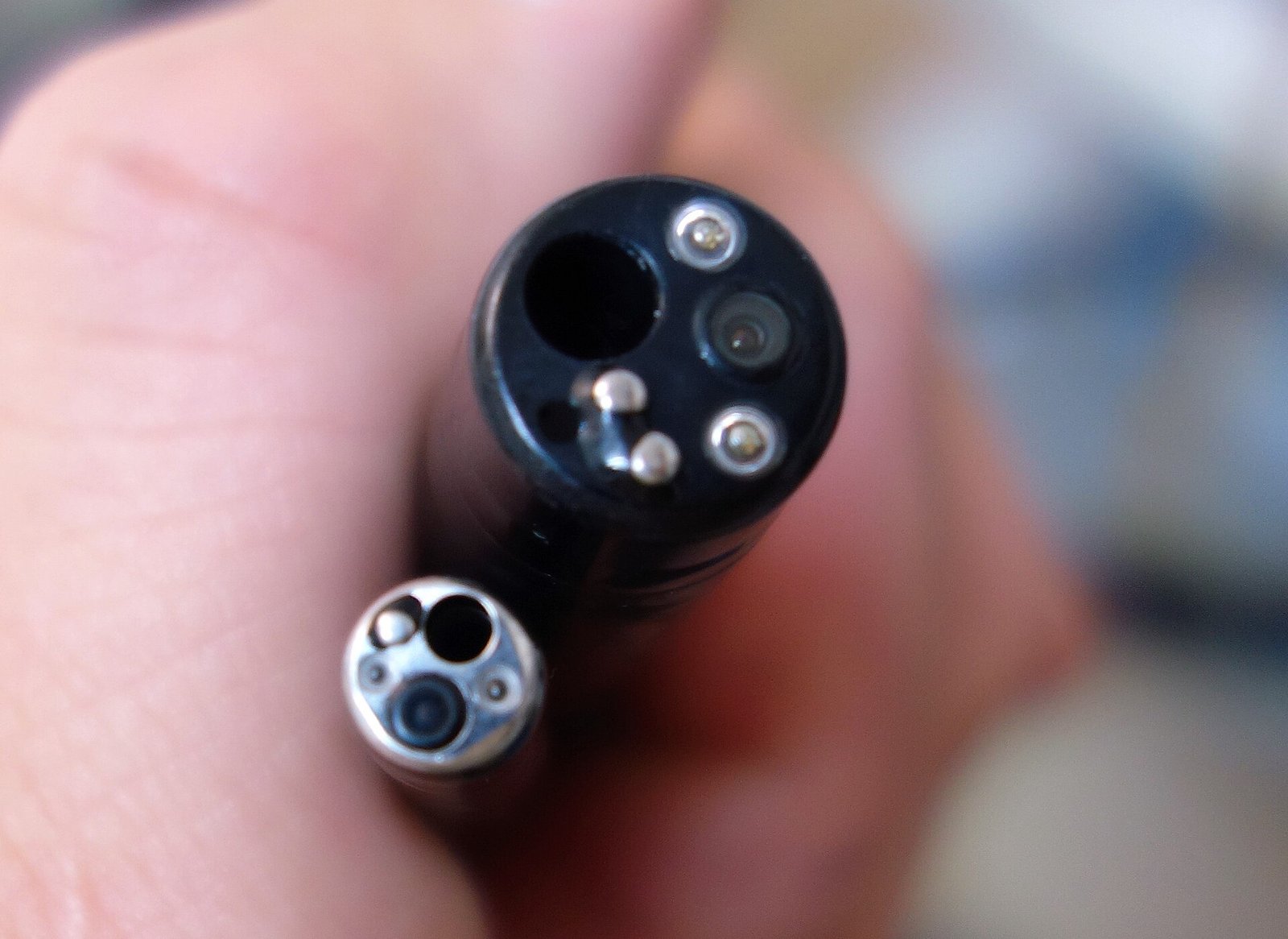
What the biopsy channel is
The biopsy channel, also called the instrument, working or forceps channel, runs from the biopsy port on the control body down the insertion tube to an outlet at the distal tip. On most scopes it is also the path suction takes. It is a straight piece of flexible tubing.[1][2]
Medwalt’s replacement biopsy channel tubing is made of Teflon® (PTFE), with inner diameters from Φ1.2 to Φ4.2 mm and custom sizes on request.[1] PTFE is used because it has very low friction and a non-stick surface, which helps accessories pass and makes the channel easier to clean.[1]

How biopsy channels get damaged
Olympus and independent repair shops describe the same main causes:
| Cause | What happens | Source |
|---|---|---|
| Accessory pushed through a sharply angulated tip | A needle or forceps can puncture the channel wall | [3][4] |
| Accessory inserted too fast or with force | Holes or scrapes in the channel | [3] |
| Injector needle advanced before it leaves the scope | The needle scrapes or holes the channel on the way through | [3] |
| Damaged, kinked or open forceps; frayed brushes | Tears and scratches in the channel material | [2][3][4] |
| Over-coiling, twisting or buckling the insertion tube | The channel kinks or collapses inside the tube | [2][4] |
| Repeated passage of stiff or sharp devices | The inner surface wears rough along its length | [5] |
| Laser fiber or electrosurgical accessory fired inside or too close to the channel | Scorching or melting of the channel | [5] |
One repair company advises not to pass anything through the bending section when the tip is angulated more than 110°.[4] The scope’s own instruction manual is the reference for your model.
Signs that the channel is damaged
- Leak test bubbles at the ports. Olympus says that if a stream of bubbles comes from the biopsy port or the channel outlet at the tip during a leak test, there is a hole in the instrument channel and the scope should not be used.[3] Fluid can get in through that hole during reprocessing and damage internal parts that a visual check will not show.[3] See our endoscope leak testing guide for the procedure.
- A leak with no visible damage outside. A failed leak test with an intact insertion tube can mean the channel has been punctured from the inside.[5]
- Accessories that drag or feel gritty. A rough feel along the channel usually means the inner surface is worn.[5]
- Weak suction or accessories that will not pass. A kinked or collapsed channel restricts both.[2]
- Burn marks or a burned smell near the channel after laser or electrosurgical work. Treat this as urgent.[5]
Repair or replace?
A damaged channel tube is replaced, not patched. An endoscope repair review in Gastrointestinal Endoscopy lists replacement of the biopsy/suction channel as a major repair, alongside insertion tube and air/water assembly replacement.[6] Endoscope Repair Company adds that a worn channel cannot be cleaned to protocol and will keep tearing accessories and seals, so it should be replaced rather than returned to service.[5]
Damage often travels together. Because a damaged insertion tube or bending section can kink or collapse the channel,[2] check those sections too. If the insertion tube needs replacing, it is the natural time to fit a new channel; see our insertion tube and insertion section parts.
After the work, repair shops check the scope before it goes back:[5]
- Leak test.
- Patency and flow check of each channel.
- Pass a reference accessory end to end to confirm it moves smoothly.
- Pressure test again before shipping.
What to match when you order replacement channel tubing
- Scope brand and model. The channel has to suit the scope it goes into.
- Inner diameter. Match the original. Medwalt supplies Φ1.2–4.2 mm.[1] If the original size is outside that range, ask us about custom sizes.
- Length. Match the original run from the port to the distal tip.
- Parts at the port end. Check the biopsy cap at the same time. Both are in our biopsy channel and caps range. For why worn caps cause bigger failures, read Waterproof Cover & Biopsy Cap: The Cheapest Parts That Cause the Most Expensive Failures.
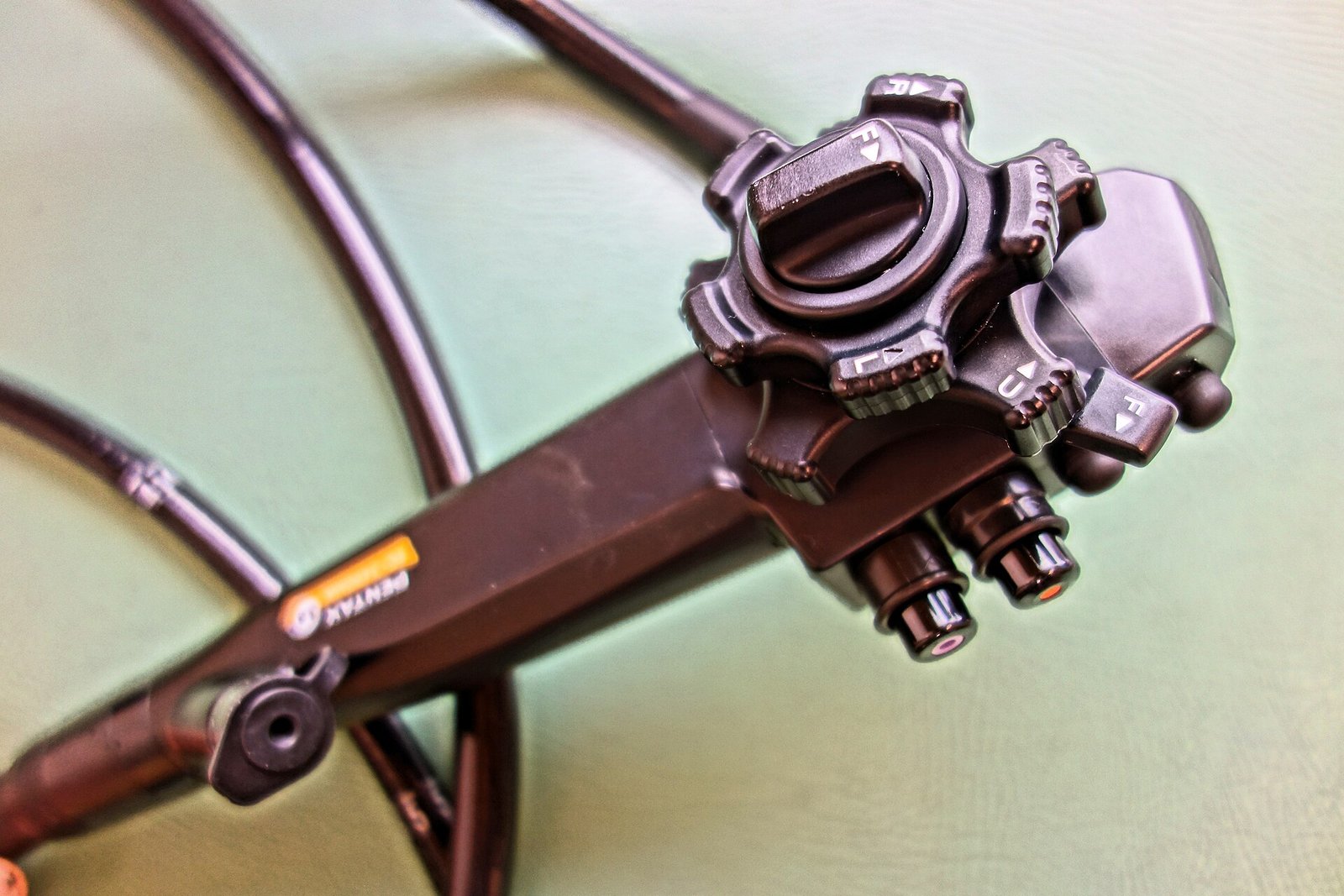

How to protect the channel
From Olympus’s damage-prevention guide and repair-shop advice:
- Straighten the bending section before you advance an accessory, and use short strokes so you feel resistance early.[3]
- Insert biopsy forceps straight, with the cups closed.[3]
- Do not deploy an injector needle until the tip is in the endoscopic view.[3]
- Never force an accessory through the channel.[3]
- Inspect forceps, accessories and brushes before use, and check they suit the channel size.[2][3]
- Do not coil the insertion tube tightly, and use sinks and basins big enough that you do not have to.[2]
FAQ
Is the biopsy channel the same as the suction channel?
On most flexible endoscopes, yes. Accessories and suction share the same channel, so damage to it affects both.
Can a punctured biopsy channel be repaired?
No. The damaged channel tube is replaced. Replacing it is classed as a major repair.
How do I know if the biopsy channel has a hole?
During a leak test, look at the biopsy port and the channel outlet at the tip. A stream of bubbles from either means there is a hole in the channel, and the scope should not be used.
What size biopsy channel tubing do I need?
Match the inner diameter and length of the original channel for your scope model. Medwalt supplies PTFE channel tubing from Φ1.2 to Φ4.2 mm, with custom sizes on request.
Why do accessories feel rough going through the channel?
A rough or gritty feel usually means the inside of the channel is worn from repeated accessory passage. A worn channel should be replaced.
Sources
- Medwalt — Biopsy Channel product page: https://medwalt.com/product-details/biopsy-channel/
- Total Scope, Inc. — Endoscope Biopsy/Suction Channel Replacement: https://www.totalscopeinc.com/endoscope-biopsy-suction-channel-replacement/
- Olympus America — Identifying and Reducing Preventable Flexible Endoscope Repairs (PDF): https://medical.olympusamerica.com/sites/default/files/us/files/pdf/Identifying-and-Reducing-Preventable-Flexible-Endoscope-Repairs.pdf
- Primedeq — Common problems in flexible endoscope usage and possible repair: https://primedeq.com/blog/common-problems-in-endoscope-usage-and-possible-repair/
- Endoscope Repair Company — Biopsy Port Repair / Working Channel Service: https://endoscoperepaircompany.com/repairs/biopsy-port-repair/
- Gastrointestinal Endoscopy (2003) — Endoscope Repair by Original Equipment Manufacturers and Independent Service Organizations: https://www.giejournal.org/article/S0016-5107(03)00316-X/pdf
Image credits
- “Insertion tip of endoscope” by melvil, CC BY-SA 4.0, via Wikimedia Commons: https://commons.wikimedia.org/wiki/File:Insertion_tip_of_endoscope.jpg
- “PENTAX Colonoscope003” by melvil, CC BY-SA 4.0, via Wikimedia Commons: https://commons.wikimedia.org/wiki/File:PENTAX_Colonoscope003.jpg
- Product photos: Medwalt.
